
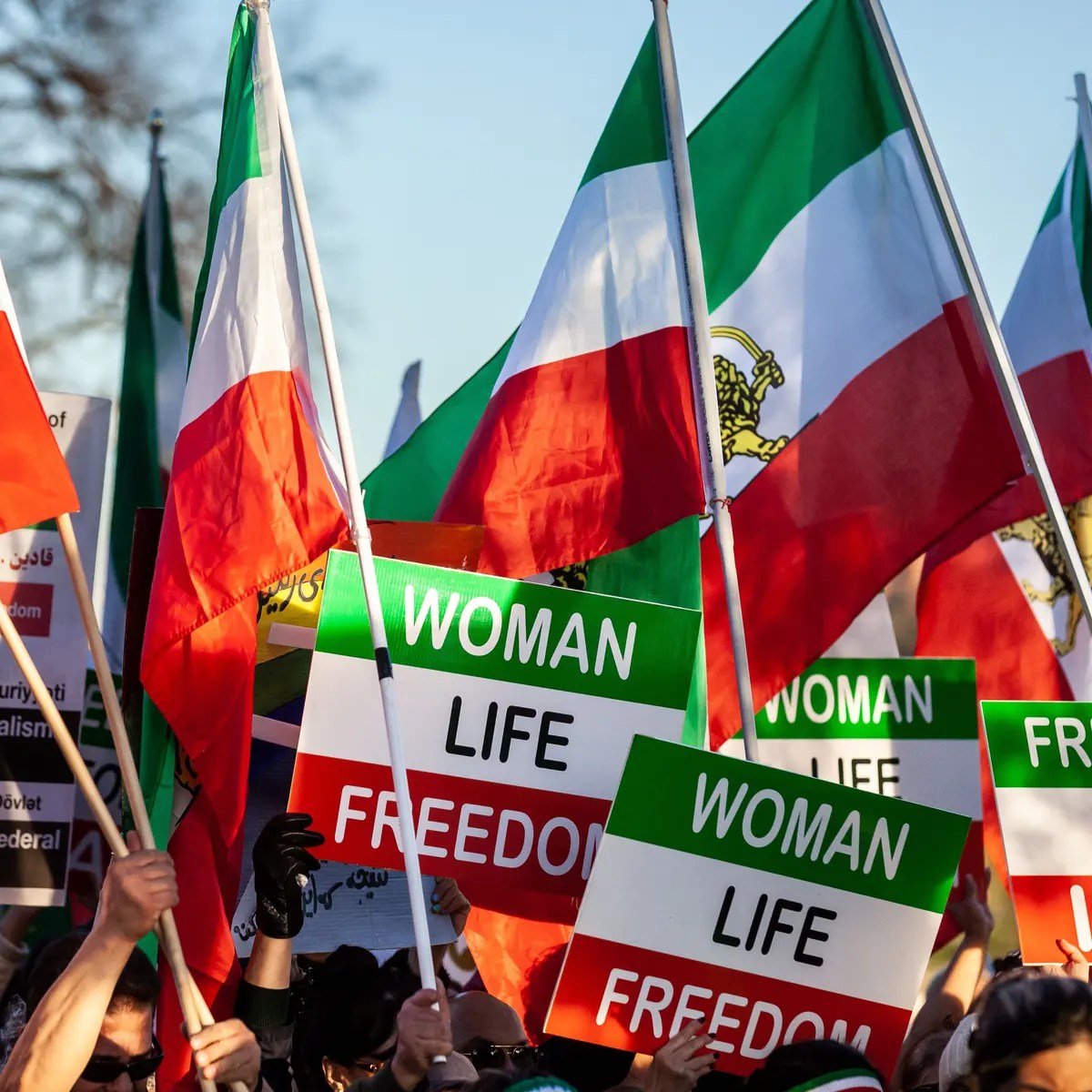
This article appeared in the Happinez Magazine of the Morning newspaper Sri Lankan in November 2022.
On September 16th, 2022, Mahsa Amini, a 22-year-old Iranian woman, died while in the custody of the Guidance Patrol, better known as the “Morality Police”, of Iran. She was detained for not complying with the country’s veiling laws (laws that state how women should dress and wear the hijab) – she was allegedly wearing it too loosely. The authorities say that Amini had a pre-existing condition and thus had suffered a heart attack. However, her family denies that she had any such condition, and also says that witnesses had seen Amini being beaten up by the police so badly that she fell into a coma. Three days later, Amini passed away while receiving treatment in a hospital.

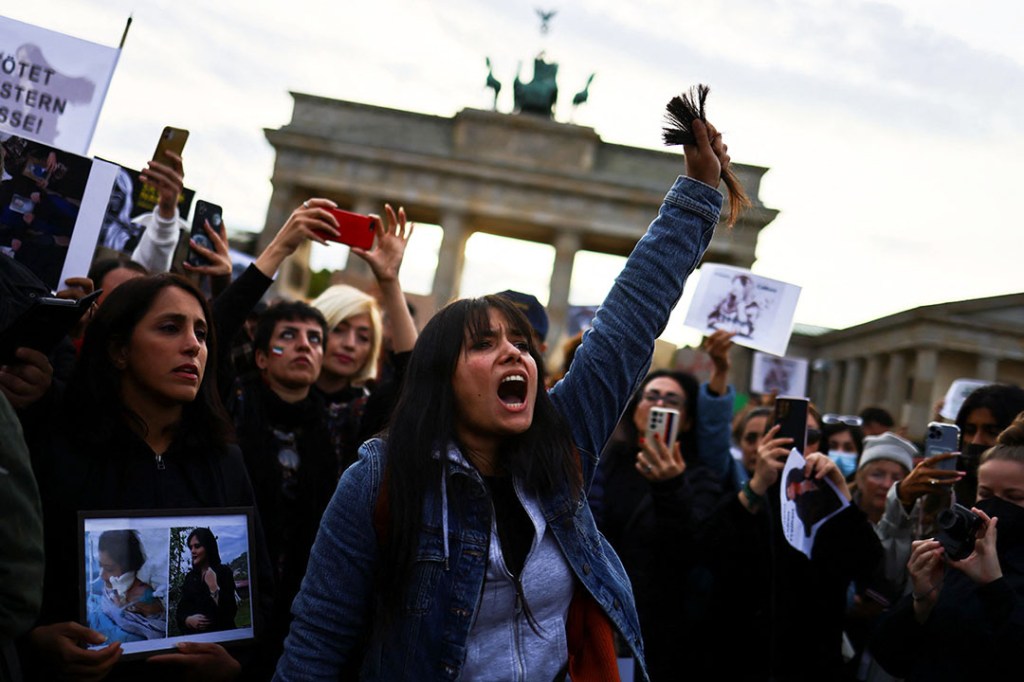
This sparked protests in dozens of cities, where thousands of people took to the streets to demand better rights for women. Large numbers of female protestors have shown rare defiance of the government and its enforcement of the country’s hijab law. Some removed their hijab, and others cut their hair in rebellion against the laws that they believe are unfair.
The protests have also broadened to include dissent against government rule that has led to economic woes for the nation as well as unfair treatment of other minorities along with women. Women are asking for the freedom to access education, and the freedom to leave Iran without having to ask their husbands. It is now not just about attire. The protests are now calling for the end of the Theocracy.

Since the start of the demonstrations, there have been multiple causalities reported, as authorities have cracked down on them with no mercy, firing guns and water cannons and beating them with batons. Internet and telecommunication lines have been restricted as well, cutting off Iran from the rest of the world digitally. Protestors are being killed almost every day by security forces, and mass arrests are also underway. They are also targeting famous personalities who are “fanning the flames” of the protests.
Human rights groups are calling for the Iranian government to be held accountable for its actions. At the time of writing this article, an Oslo-based Iran Human Rights group reported a death toll of at least 76 people including children. Iran has blamed outside forces for the protests and launched cross-border missile and drone strikes that killed 13 people in Iraq’s Kurdistan region, accusing armed groups based there of fuelling the unrest. The Iranian government is standing firm on its laws.
Who is the Morality Police?
The Guidance Patrol has a lot of freedom and power to operate. Their role is to enforce religious obedience in Iran, ranging from how to dress, behave, and socialize with the opposite sex. Punishment can range from warnings to physical beatings.
The Iranian Government
Iran is referred to as a Theocracy – where the Supreme Leader “embodies the sovereignty of God” as he rules. In other words, the religious leader rules in the name of God. Although Iran has a parliament and ministers, which are elements found in democracies, the ruler of the country is not chosen by the people. The Iranian Government has quite a complicated structure, so I won’t go into too much detail here, but see if you can decode the diagram attached.
The Islamic Republic of Iran was formed in 1979, ending the then-existing monarchy after the Islamic Revolution. The Islamic or Iranian Revolution occurred as a series of events that aimed to overthrow the Pahlavi Dynasty under Shah Mohammad Reza Pahlavi. Following this, a referendum or vote was held by the interim government asking citizens to vote Yes or No to the Islamic Republic. 98.2% of them voted Yes, and the government was now led by Ayatollah Khomeini. Iran reverted back into a highly conservative state – probably even more so than it had been before the monarchy. Talk about a rubber band effect!
In 1982, many strict laws were passed. The marriageable age for women was brought down to nine, and the right to divorce and custody of children became much stricter.
Pahlavi Dynasty
This ruling monarchy lasted 54 years prior to the Islamic Revolution, and the United States had a lot to do with them coming into power. The custom of women wearing veils was banned, the minimum age for marriage was raised, and strict religious divorce laws were eased. The number of schools increased for both boys and girls. You’ve probably seen photos of Iranian women in very westernized women floating around on the internet – those belong to this time.
One of the reasons why the Islamic revolution was so successful which had so much of the population essentially saying no to this monarchy was probably because prior to the Pahlavi Dynasty, the religious rules were a strong part of Iranian culture. The sudden change from conservative to modernized laws would not have been viewed positively by the majority- conservative and culturally strong population of the time. One could say that the “modernity” that the Pahlavi dynasty brought to the society was too ahead of its time.
Could the current protests lead to another revolution?
The truth is the current demonstrations do not have a leader or a party backing them up, unlike the Iranian Revolution. This is no surprise considering opposition groups have always been subdued and broken up by the authorities before they could ever gain enough traction. The revolution was also successful because they had an “Islamic Revolutionary Guard” set up to protect Iran’s new Islamic system. Current protestors do not have this kind of power.
Do you think the current protests would bring about change in Iran, or will the government suppress dissent and ultimately stop the protests altogether?
Cover image: Allison Bailey

 The Curious Mag