
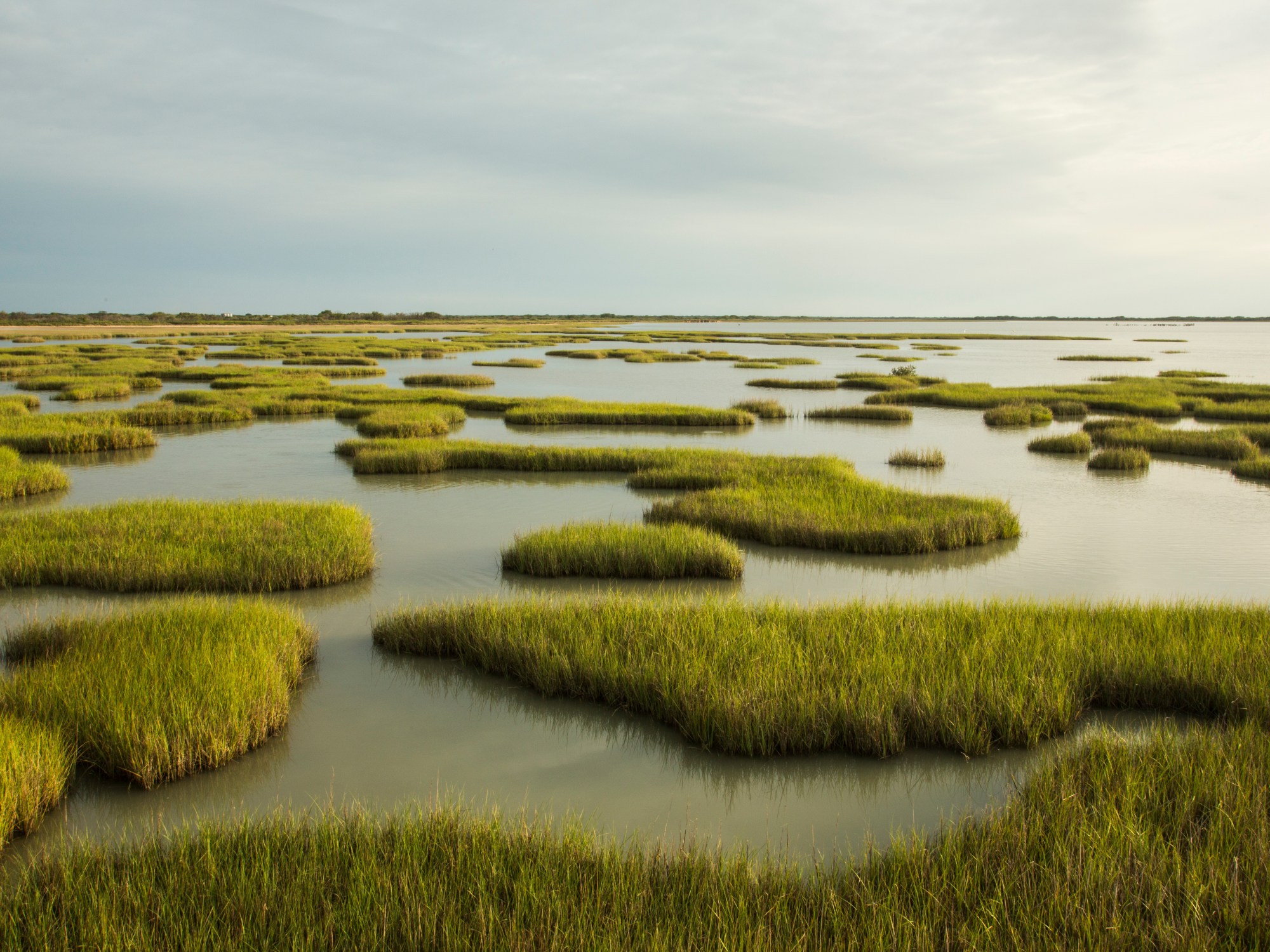
Recently, I was listening to an environmental webinar where one of the speakers mentioned “Blue Carbon,” a term I had never heard of before, not even in the two years of my A-level Geography years. I searched up on it, and now I’m here to break it down for you!
You may already know that the world’s forests, soil, and ocean are “carbon sinks”. Carbon sinks are generally natural “reservoirs” of sorts that absorb carbon dioxide (CO2) from the atmosphere (known as carbon sequestration) and stores it for an indefinite period of time. There is a constant “exchange” of gas between the Air and the sink, but most of the CO2 is stored. The below diagram may seem complicated, but I’ve added it to show you the carbon exchange that is constantly happening within our biological world.

So why did I speak about carbon sinks just to talk about Blue Carbon?
Well, Blue Carbon is a specific term used to denote the carbon sequestration by the world’s oceanic and costal systems – mostly algae, saltmarshes, mangroves, seagrasses, and other plants in coastal wetlands. The carbon is stored in their underlying sediments, below-ground biomass, and dead biomass. Coastal wetlands, marshes etc. are known to be highly efficient in storing CO2, where it remains in the soil for millennia. How efficient are we talking? Each year, blue carbon systems absorb an amount equal to Thailand’s carbon emissions! Here comes another diagram (this one’s more fun, though):
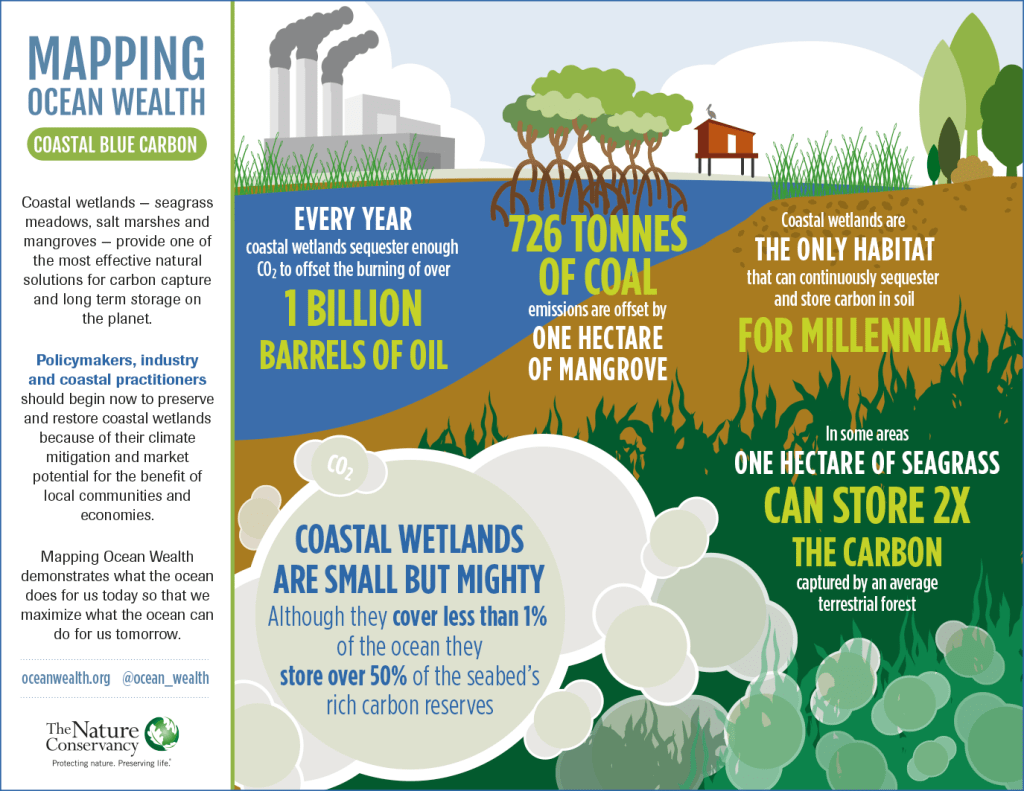
You can see why blue carbon systems are so important to the atmosphere, considering the amount of man-made carbon emissions that are being released into the atmosphere, which is increasing daily! However, the rate at which blue carbon sinks are being lost is alarming, to say the least. Coastal wetland areas are being cleared for aquaculture, coastal development, and various other land uses. Current rates of loss of these ecosystems are estimated to be between 0.7–7% of their global area per year, resulting in estimated emissions equal to the annual fossil fuel emissions of the United Kingdom. (Yes, when you clear these areas, it actually releases the CO2 back into the atmosphere.) The combined global area of these blue sinks equate to about 2-6% of the total area of tropical forest. And, well… degradation of these areas account for 3-19% of the carbon emissions from global deforestation.
As you can now probably tell, blue carbon systems are significant in helping us balance out the carbon emissions (both man-made and natural). And therefore, efforts in conservation, as well as restoration projects, are of utmost importance!
You can find more information about carbon sinks here: IUCN
Nethmie Dehigama
Header image Source: Wikicommons

 The Curious Mag