
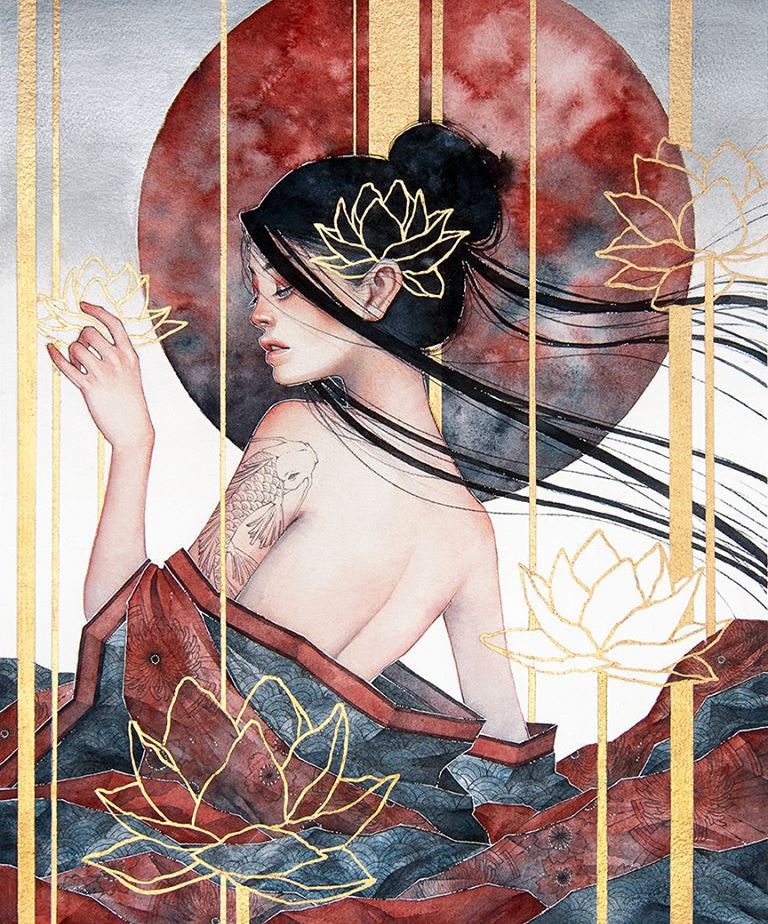
Just a couple of days ago, we saw another “cultural appropriation scandal” blow up across the internet. A girl named Keziah wore a qipao – a Chinese traditional dress – for her prom, and a Jeremy Lam called her out.
What is cultural appropriation exactly? According to Oxford Dictionary, it is:
The unacknowledged or inappropriate adoption of the customs, practices, ideas, etc. of one people or society by members of another and typically more dominant people or society.
Alright… so what, then, is culture? This is where things get complicated. In “Keywords: A Vocabulary of Culture and Society”, Raymond William writes that ‘Culture’ is a complex term representing multiple meanings that change according to different contexts and time periods. Williams continues:
‘Culture’ means a society that has its own shape, its own purpose and its own meanings expressed through institutions and in arts and learning… The making of a society is the finding of common meanings and directions.
Before we get into the discussion, I asked some of my friends what they thought of this particular incident. Here’s what they had to say.
Treading the murky waters of cultural appropriation is not easy, especially in the age of Social Justice Warriors lurking online. The idea of “cultural appropriation” seems to have reduced to simply donning or using something of another culture. However, there are so many nuances that need to be addressed before calling out “cultural appropriation”
It is important that real cultural appropriation can, certainly, happen. Think sexualising another culture’s attire for aesthetic pleasure, or wearing another culture’s garbs with the intention of mocking and denigrating it. Things get especially problematic when a dominant culture with a history of being colonizers do this to their previously colonised. As Fordham University law Professor Susan Scafidi told Jezebel in 2012, appropriation is
“most likely to be harmful when the source community is a minority group that has been oppressed or exploited in other ways or when the object of appropriation is particularly sensitive, e.g. sacred objects.”
Thus, it also will be controversial if another culture’s traditional artefacts and rituals are bastardised and reduced to a shallow husk – especially if involves religious beliefs and/or rites that you need to go through before you are deemed worthy of wearing it, as found in Native American traditions for instance.

On the other hand, sometimes we can get confused between cultural appropriation and cultural appreciation. Especially in the modern globalised and hyperconnected world, are we not to expect aspects of foreign culture to spread? What is the point of a connected world if this doesn’t happen? Cultural exchanges give birth to new ideas and inspirations, too, be it clothing, food, or ways of life. What’s more, we usually extract the “good” parts of cultures, integrating it into our own with the aim of developing the quality of our lives for the better while furthering our personal happiness. Thus, if someone prefers an aesthetic value of a certain cultural attire and dons it out of appreciation for it, I don’t see the problem in engaging with it.
Furthermore, segregating cultures so rigidly only adds to a self/other dynamic. This is especially true when we keep on recalling historical issues that the present generation had nothing to do with. Yes, they can stand up against those issues, but that doesn’t mean that they should get the entire blame for it. Instead, if people are allowed to explore other cultures, it may help to improve on communications and relations between them. This means a potentially less racist, more united future for most of the world.
Additionally, I personally think that all cultural artefacts are ephemeral material goods. Sure, it holds value and should be respected as a result. But, isn’t it the nature of reality that everything changes? Cultural integration has to be expected in an internet age. The world is moving on, really.
Most importantly, it is necessary to understand that culture is not owned by an entity or entities. Instead, people participate in embodying and reinforcing culture and reproducing it too. Just because one person does not like that someone of a different culture is participating in theirs, it does not represent the viewpoints of ALL those of that culture. There are plenty of those who are completely fine, and in fact, encourage cultural exchanges!
Overall, I believe it is important that when we are stepping over our own cultural boundaries in order to experience others’, we must proceed with mindfulness and respect. As long as you don’t insult or shame, it’s alright to engage. Society is never static, and neither is culture. If we are to promote a good cultural understanding with one another, we must have a “hands-on” experience, after all!
Nethmie Dehigama
Header Image: Kelogsloops

 The Curious Mag