
Change is the death of something.
Death: we always leave it for later, pushed into a dark, dusty corner of our mind. We only ever think about death when a living being dies. As George Perec points out in Approaches to What?, railway trains only begin to exist when they are derailed. The more passengers are killed, the more the train exists. We begin to be truly aware of the material, palpable existence of planes in reality when they crash or are hijacked. In other words, we only see the reality of something when the change is sudden and drastic. Perec is discussing the nature of everyday lives that aren’t given attention to in history – History is written, primarily, about scandalous disruptions. What Perec is trying to illustrate is that it is always disruption that brings us “back to reality” with a start. It is the same thing when it comes to being aware of ephemerality or death in our everyday existence that is lost in our habituated lives.
Thinking about death and being aware of death in our everyday lives will not only bring a theoretical articulation of it but it will also throw our already cherished and theoretical values into crisis, as Ben Highmore likes to put it. Death – or ephemerality – surrounds us in our lives and yet we’ve fallen into such a mundane, routine life that almost forces us to forget the present moment, the making of the moment and the death of the moment. Maybe we don’t think about death in the everyday due to the abjection that arises out of it – from birth, we seek perfection, but it can never be for it means stasis. Maybe that’s why we throw ourselves into a routine. Our need to strive for perfection is stronger than our need to appreciate the imperfection of a transient reality.
Through the video below, I hope to make the familiar a little strange. We always think of death as the end of a living being, but we are not conscious of how we are surrounded by it. Be it the change from moment to moment, where one moment dies for another to be born, or the waves that rush the shore and go back out again, or all material things that are always changing shape or location in space, or our feelings that are ever-fickle, or our mind itself that is shifting all the time. Death happens to accommodate more life, and without it, there will be no existence. Seeing death for how it exists allows us to appreciate everything for what it is.
Just like nature has its own patterns, existence has its own pattern, too. And that pattern is a constant, unrelenting oscillation between birth and death.
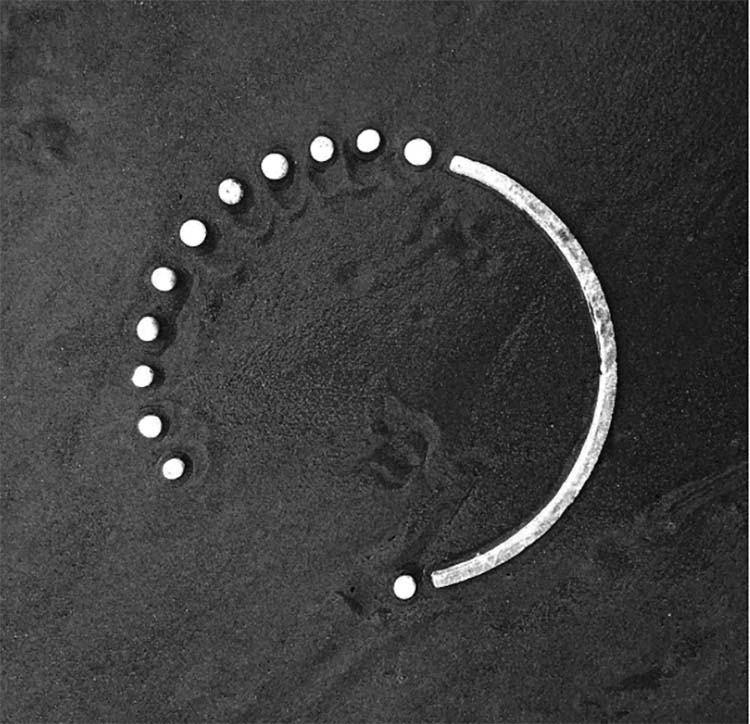
Header Image: Leonie Barton

 The Curious Mag
One thought on “Death In The Everyday”